Water and wastewater handling needs level control that is simple, clog-resistant, and reliable in dirty, corrosive, and unattended conditions. Reed float switches meet those demands with a sealed mechanical design that has been the standard for sumps, tanks, and treatment plants for decades.
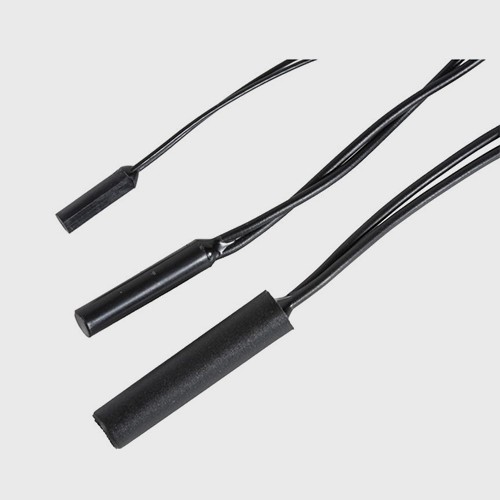
Basement sumps, sewage pits, and car park pump pits use cable float switches to control their pumps. The float contains a reed switch and hangs from a cable; as the water rises, the float tilts and the internal reed switch closes, starting the pump, and as the water falls the float tilts back and the pump stops. The design is extremely simple and resists clogging by sewage, and cable lengths of 3, 5, and 10 metres are available to suit different pit depths. This is one of the highest-volume level control applications in the world.
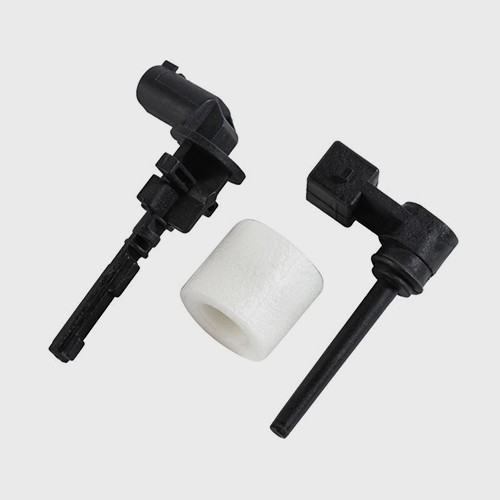
Drinking water tanks, rainwater harvesting tanks, and wastewater holding tanks all need level monitoring and automatic pump start and stop. Drinking water applications need food-grade materials, and rainwater tanks need to withstand outdoor conditions. Vertical, guide-rod sensors suit deep tanks, while side-mounted sensors suit shallow tanks. Automatic filling keeps the tank full without manual attention, and low-level protection stops the pump from running dry.
Settling tanks, balancing tanks, and lift stations in wastewater treatment plants need level monitoring to prevent overflow, protect pumps, and keep the treatment process running. The media is corrosive and contains solids, so sensors must be corrosion-resistant, rated IP68, and resistant to clogging. The sealed construction and simple mechanical principle of a reed float sensor make it more reliable in this environment than electronic alternatives, and explosion-proof versions are available for hazardous zones.
Level sensors in water and wastewater systems usually drive automatic pump control: the pump starts at a high level and stops at a low level, with alarms for high-high and low-low conditions. Duty and standby pumps can be alternated to share the wear, and a high-level alarm warns the operator before an overflow occurs. Because the sensors are simple and passive, the control logic stays simple too, and the whole system keeps working even if the power to the control panel is interrupted, as long as the pump itself has power.
Reed float switches have no electronics in the liquid, no exposed contacts, and no sensitivity to the conductivity or composition of the water. They work in clean water, sewage, and chemical-laden wastewater alike, and they keep working with almost no maintenance. For water and wastewater operators, that reliability is the deciding factor.
 English
 Español
 Français
 Deutsch