Medical devices demand switching that is tiny, sealed, ultra-reliable, and almost free of power consumption. A reed switch is a glass-sealed capsule with two metal contacts and no semiconductor, no battery drain at rest, and a lifetime measured in millions of operations. That is why miniature reed switches are found inside pacemakers, infusion pumps, blood analyzers, and hearing aids.
An implanted pacemaker contains a miniature reed switch. To communicate with the device, a doctor holds a magnet near the patient's chest: the magnetic field passes through tissue, closes the reed switch, and the pacemaker responds by downloading data, adjusting the heart rate, starting a calibration, or changing mode. At rest the switch is open and draws almost no current, which helps the battery last the ten years of fault-free operation an implanted device requires. In an implantable defibrillator, placing a magnet over the device inhibits the delivery of high-voltage shocks. Miniature reed switches have helped shrink pacemakers to the size of a thick coin.
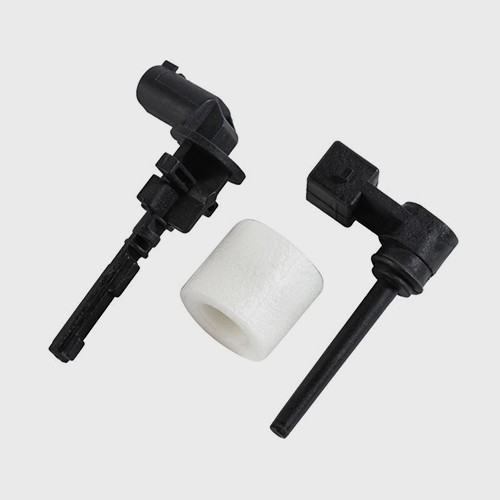
Infusion pumps use reed sensors to detect liquid level and to sense when a medication cartridge is inserted or removed. Blood analyzers use them to control fluid flow. Both applications require sterile, sealed, zero-leakage construction, and the hermetically sealed glass body of a reed switch meets that requirement naturally. Reed level sensors are also used in laboratory fluid systems, where clean, reliable level detection matters more than anything else.
Ultra-miniature reed switches serve as magnetic control and mode switches in canal hearing aids, micro glucose monitoring and dosing systems, carotid plaque detection, and implantable muscle stimulation and incontinence prevention systems. In each case the requirements are the same: a switch small enough to fit inside the body, sealed against bodily fluids, and drawing so little power that it barely affects battery life.
Reed switches are hermetically sealed, so they cannot be contaminated by blood, drugs, or bodily fluids. They switch with a magnetic field that passes through tissue and plastic, so no wire or opening is needed to reach them. And they draw essentially no power at rest, which is exactly what an implanted or battery-powered medical device needs.
 English
 Español
 Français
 Deutsch