Strong acids and alkalis attack ordinary metals, so level sensing in chemical storage tanks needs materials that can survive the media. The reed float approach is well suited to this problem, because the switch itself never touches the liquid: it is sealed inside a guide tube, and only the float and the tube need to resist corrosion.
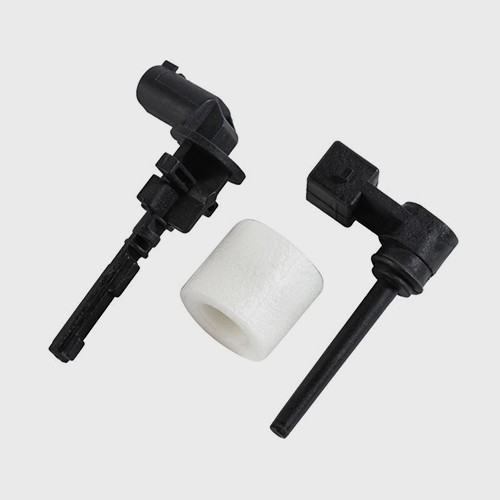
Chemical storage level sensors are built with floats and guide tubes in PTFE, PVDF, Hastelloy, titanium, or duplex stainless steel, chosen to match the chemical being stored. The reed switch sits inside the sealed guide tube, and a magnetic float slides along the outside of the tube as the level changes, triggering the switch without any contact with the liquid. This separation between the sensing element and the media is the key advantage: the switch stays clean and dry while the wetted parts are made from materials that the chemical cannot attack.
A magnetic float rides on the surface of the stored liquid and follows it up and down. Inside the guide tube, a chain of reed switches is spaced along the length of the tube. As the float passes each switch, the magnetic field closes it, and the pattern of closed switches gives the level as a resistance or switched output. Because the measurement depends on buoyancy and magnetism, it is unaffected by the conductivity, viscosity, or colour of the chemical, and it keeps working in liquids where ultrasonic or capacitive sensors struggle.
Many chemical storage areas are classified as hazardous zones, and level sensors for these locations carry ATEX or IECEx certification for zones 0, 1, and 2. Certified reed float switches are available with the appropriate housings and barriers, so the same simple, reliable measurement can be used safely in explosive atmospheres. This makes reed float sensing one of the few level technologies that covers both corrosive media and hazardous-area requirements in a single device.
Corrosion-resistant reed float level sensors are used in acid and alkali storage tanks, chemical processing vessels, plating lines, and any application where the stored liquid would destroy an ordinary metal sensor. They are also used for high-temperature chemical tanks, where the float and guide tube materials are selected to withstand both the chemical and the temperature.
Reed float sensing keeps the switch out of the chemical, works in any liquid regardless of conductivity, and offers hazardous-area certification in a simple, passive device. For chemical engineers, it is a low-risk way to measure level in the most aggressive media.
 English
 Español
 Français
 Deutsch