Oil and water do not mix, and they have different densities, so oil floats on top while water settles below. Before industrial wastewater can be discharged or reused, the oil must be separated out, and the key measurement in every separator is the position of the oil-water interface. Reed float switches, with floats whose density is precisely engineered, are the standard way to find that interface and to control the separation process.
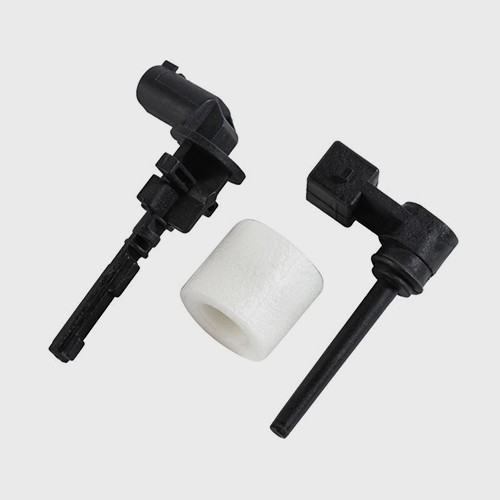
An interface float is designed with a density between that of oil and water, so it sinks through the oil layer and floats on the water below, coming to rest exactly at the oil-water interface. As the interface moves, the float follows it and triggers a reed switch sealed inside the guide tube. An ordinary float cannot do this: it would simply float on top of the oil. Interface floats are typically made from stainless steel, rated for high temperature and pressure, and are the core sensing element of oil-water separation equipment.
Industrial wastewater from steel mills, mining, food processing, power generation, and heavy equipment washing contains oil that must be removed before discharge or reuse. Separators use one, two, or three interface floats. A single float raises a high-oil-level alarm; a two-float arrangement adds a second float just below the oil discharge pipe as a backup; a three-float arrangement can start and stop the oil discharge pump automatically. Floats are stainless steel and stems are brass, for resistance to oil and corrosion, and the sensors can be installed far from the control panel.
Crude oil storage tanks hold oil and water in layers, and both levels need to be measured at the same time. Two floats of different buoyancy ride on a single guide rod, one following the oil surface and the other following the water surface. Each float triggers a chain of reed switches in turn, and a microprocessor reads every switch through a shift register, so that even if one switch fails it can be identified and ignored while the system keeps working. The same principle applies to underground fuel tanks where water collects beneath the fuel.
Water in hydraulic oil seriously damages equipment: additives break down, corrosive by-products form, the lubricating film weakens, and filters clog. Because water is heavier than oil, it sinks to the bottom of the tank. An interface float installed at the bottom of the tank normally rests in the oil, but as soon as water collects underneath it, the float is lifted slightly and triggers a water-detected alarm. This protects hydraulic systems in elevators, heavy lifting vehicles, and machine presses.
Interface detection depends on a float that responds to density, not to conductivity or capacitance, so it works in oil, water, and mixtures where electronic methods struggle. The reed switch itself is sealed away from the media, so only the float and guide tube need to resist corrosion. The result is a simple, rugged measurement that has been the industry standard for decades.
 English
 Español
 Français
 Deutsch