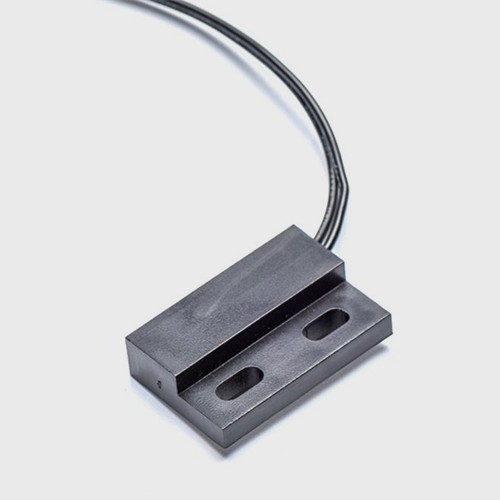
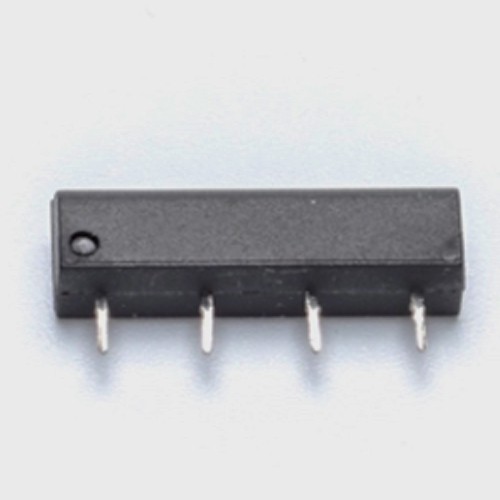
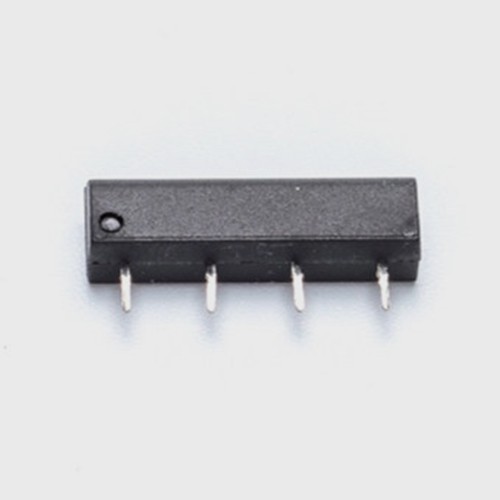
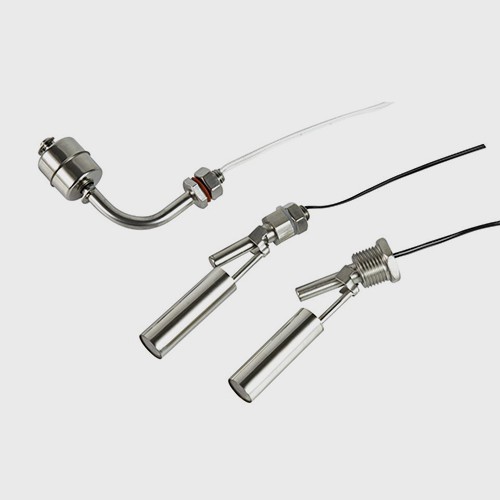
Reed relay technology In the reed sensor, the key element is the leaf switch, and the other main elements are the open or closed elastic plate and the magnet or electromagnet. After 60 years, some improvements have been made in the development of reed switches, making them more reliable and reducing costs while improving quality. Because of these dramatic improvements, reed switches have become the design choice in some demanding applications where quality, reliability and safety are paramount. Specific working principle: The contact form of the reed relay depends on the reed switch used. There are three types of reed switches: normally open (H), normally closed (D) and conversion (Z). The sheets of the normally open reed switch are respectively fixed on the two ends of the glass tube. Under the action of the coil (magnet), the magnetism generated at one end is exactly opposite to the other end. Therefore, the two contact points rely on the magnetic "opposite attraction" to overcome The elasticity of the shrapnel closes; the normally closed dry reed rod is fixed on the same end of the glass tube. Under the action of the external magnetic field, the magnetic properties produced by the two are the same. Therefore, the two contacts rely on "same repulsion" to overcome the elastic force of the tongue. And disconnect; add a normally open piece on the basis of the normally closed piece to form a switching contact
The reed relay is mainly composed of a sheet and an excitation coil. The sheet (contact) is sealed and made of iron-nickel alloy. The contact part of the tongue is usually plated with precious metals (such as gold, rhodium, palladium, etc.), with good contact and excellent electrical conductivity. The contact is sealed in a glass tube filled with inert gas such as nitrogen, which effectively prevents dust pollution, reduces corrosion of the contact, and improves working reliability.
When the coil is energized, the free ends of the two pieces of the tube are magnetized into N pole and S pole respectively to attract each other, thus turning on the controlled circuit. After the coil is de-energized, the sheet separates under its own elastic force, cutting off the circuit.
 English